
If you live in Cheltenham and your Worcester Bosch boiler has suddenly started flashing letters and numbers at you, you are not alone. It is one of the most common reasons people ring us in a mild panic, especially first thing on a cold morning when the heating has not kicked in.
Those little codes are not as mysterious as they look. They are your boiler’s way of telling you what is wrong. In this guide I will walk you through the most common Worcester Bosch fault codes and Worcester Bosch error codes, what they usually mean and what you can safely check yourself before calling an engineer.
> Looking for Worcester Bosch Boiler Repairs?
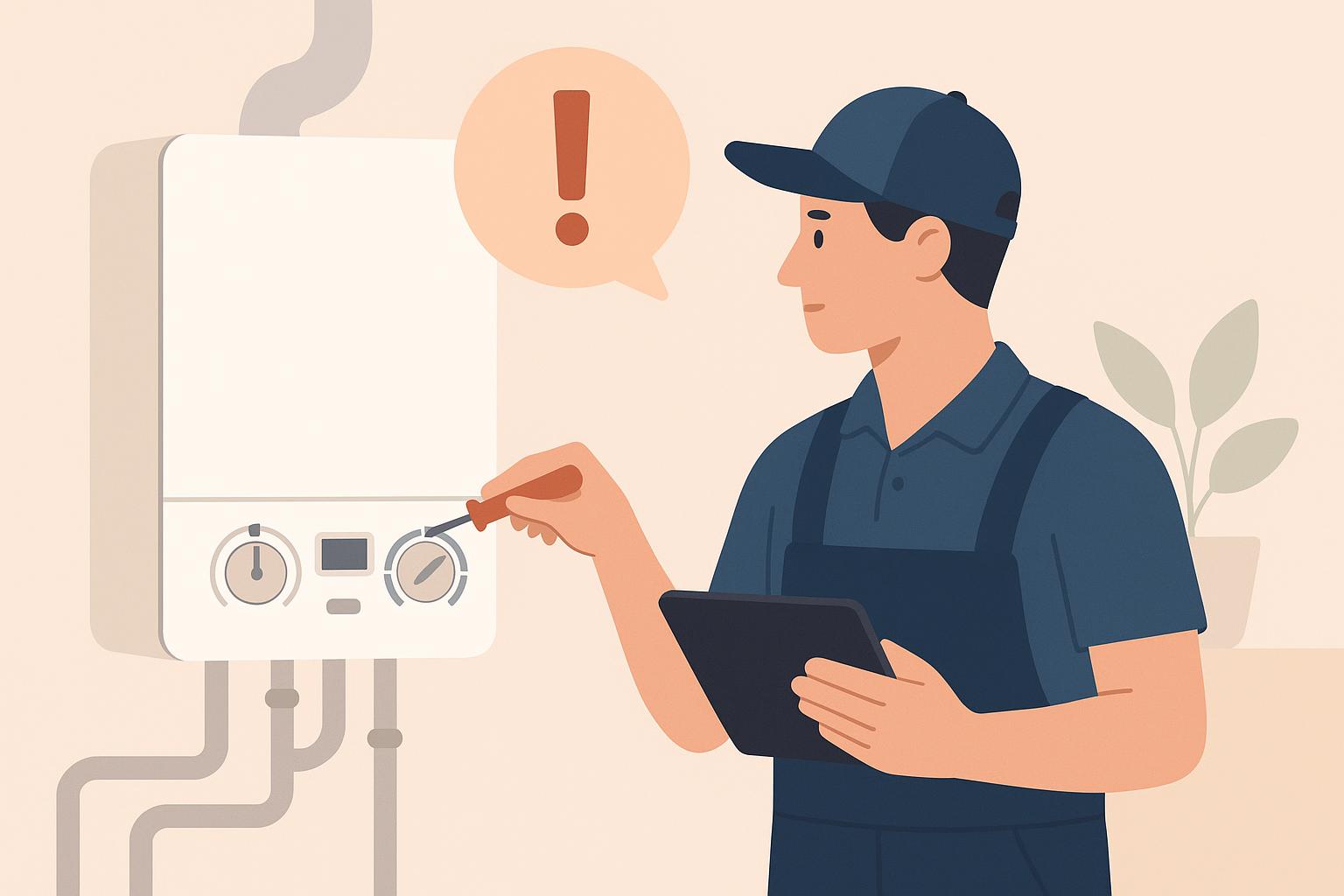
Most Common Worcester Bosch Fault Codes
Over the years we have seen the same few codes crop up time and again in homes across Cheltenham and the surrounding villages. Some are minor, some need professional attention straight away.
EA – No flame detected
This is probably the one we get asked about most. The EA code means the boiler has tried to light but has not detected a flame. In simple terms, it is not firing up.
Common causes include:
- Low gas pressure
- A frozen condensate pipe in winter
- An issue with the ignition or flame sensor
If you see EA, first check that your gas supply is on and that other gas appliances are working. If it has been freezing overnight, step outside and see whether the white plastic condensate pipe is frozen. We see this a lot during cold snaps in places like Charlton Kings where pipes can be exposed along outside walls.
Beyond that, it is a job for a Gas Safe engineer.
A1 – Low water pressure
This is one of the more straightforward Worcester Bosch fault codes. A1 usually points to low system pressure.
You can check the pressure gauge on the front of the boiler. On most Worcester Bosch models, you are looking for around 1 to 1.5 bar when the system is cold. If it has dropped below 1, you may need to top it up using the filling loop.
If you are confident, you can carefully open the valves to let water in until the pressure rises to the correct level, then close them firmly. If the pressure keeps dropping, though, that is a sign of a leak somewhere in the system and needs investigating properly.
D5 – External sensor fault
This comes up on systems that use an outdoor temperature sensor. It usually means the sensor is not communicating correctly with the boiler.
There is not much you can do yourself here other than check that nothing obvious has damaged the sensor outside. We have seen them knocked loose during garden work or affected by water ingress.
F0 – Internal fault
F0 is a more general internal error. It can relate to issues with the boiler’s electronics or printed circuit board.
If you see this code, it is best not to keep resetting the boiler repeatedly. One reset is reasonable. If it comes back, turn the boiler off and arrange a visit. Repeated resets can sometimes make a small fault worse.
What These Worcester Bosch Error Codes Actually Mean
In essence, most Worcester Bosch error codes fall into a few broad categories:
- Ignition or flame problems
- Low or high pressure issues
- Overheating
- Sensor faults
- Electrical or internal component faults
Your boiler is constantly monitoring temperature, pressure and safety devices. If something moves outside its safe operating range, it will lock out and display a code. That lockout is there to protect you and the appliance.
One thing I often tell customers is that the code itself does not always pinpoint the exact broken part. It tells us the area of the problem. Proper diagnosis still matters. For example, an EA code might be gas pressure but it could just as easily be a worn electrode or blocked condensate.
Quick Checks You Can Safely Do
Before you pick up the phone, there are a few sensible checks most homeowners can carry out safely.
1. Check the pressure
As mentioned earlier, low pressure is very common. Look at the gauge. If it is below 1 bar, topping it up may solve the problem.
2. Reset the boiler once
Most Worcester Bosch models have a reset button. Press and hold it as per the manual. If the boiler fires up and runs normally, keep an eye on it. If the same code returns, do not keep resetting it over and over.
3. Look for frozen condensate pipes
In winter, especially in exposed spots around Cheltenham, Gloucester and nearby villages, condensate pipes can freeze solid. You might notice gurgling noises before the boiler locks out.
You can gently thaw the pipe with warm, not boiling, water. Once thawed, reset the boiler.
4. Check your thermostat and controls
It sounds obvious, but we have attended plenty of “boiler breakdowns” that turned out to be flat thermostat batteries or timers that had been knocked off during decorating.
If everything looks normal and the fault code remains, that is the point where professional help is the safest option.
When to Call a Professional
Any fault involving gas supply, burning smells, repeated lockouts or internal component errors should be left to a Gas Safe registered engineer.
Modern Worcester Bosch boilers are reliable bits of kit, but they are not simple. They combine gas, electrics and pressurised water. Taking covers off or attempting DIY repairs can be dangerous and may invalidate your warranty.
We are often asked, “Can I just replace that sensor myself?” My honest answer is usually no. Even seemingly small parts need correct testing and setup. Without proper checks you can end up masking the real issue.
Regular annual servicing also reduces the chances of seeing these Worcester Bosch fault codes in the first place. During a service we check combustion, clean components, test safety devices and spot early signs of wear before they become a breakdown in the middle of January.
If you are unsure, it is always better to ask. A quick call can save a lot of stress and prevent further damage.
If you are in Cheltenham, Churchdown, Bishops Cleeve, Charlton Kings, Gloucester, Leckhampton or the surrounding area and your boiler is flashing up Worcester Bosch error codes, we are happy to help. At Cotswold Plumbers we deal with these issues day in and day out, and we know the common patterns in local homes, from older system boilers in Leckhampton terraces to newer combis in Bishops Cleeve estates. Cotswold Plumbers will give you straight advice, clear explanations and proper diagnostics rather than guesswork.